


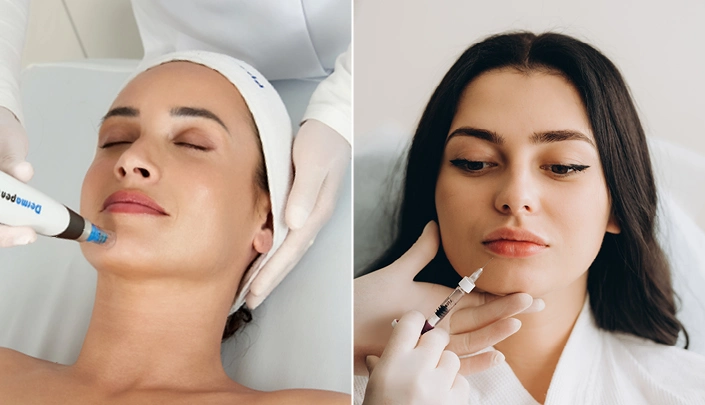
When comparing microneedling vs Botox®, it's important to understand that while both treatments are popular for skin rejuvenation, they work in very different ways and deliver different outcomes. Whether you're considering Botox® vs microneedling for wrinkles, skin texture, or overall skin rejuvenation, choosing the right treatment starts with understanding how each approach works.
To help separate fact from fiction, we sat down with Dr Andrew R Christie-Schwarz, Clinical Director and Global Medical Trainer at DermapenWorld™, to discuss the key differences between microneedling and botulinum toxin injections, including treatment benefits, downtime, results, longevity, and whether the two can be combined.
How do Botox® and microneedling work differently?
When considering microneedling versus Botox®, the fundamental difference lies in their mechanism of action. Botox temporarily relaxes targeted muscles responsible for dynamic facial wrinkles, while microneedling stimulates the skin's natural regenerative processes and infuses active ingredients in topical products to improve skin quality and appearance.
Dr Christie-Schwarz explains:
“As a neuromodulator, botulinum toxins (the generic term) are typically multiple, small intra-muscular injections, administered always by a medical healthcare professional. The injected solution blocks localised nerve signals, inhibiting acetylcholine and relaxes targeted muscles, preventing their movement. The temporary muscular paralysis reduces dynamic facial movement, smoothing the skin’s appearance in the process.”
What skin concerns does Botox® target?
If you’re researching Botox® vs microneedling, you need to understand which treatment best aligns with your aesthetic goals. Dr Christie-Schwarz advises:
“Botulinum toxin injections primarily treat the reduction of dynamic forehead, crow’s feet and upper lip rhytids (or wrinkles). It may also be used to visibly tighten the neck area, lift heavy brows and to ‘re-shape’ the face – masseter muscle injections can create a more heart-shaped appearance and injections into the nasal tip can lift or augment the position of the apex.”
What skin concerns does microneedling target?
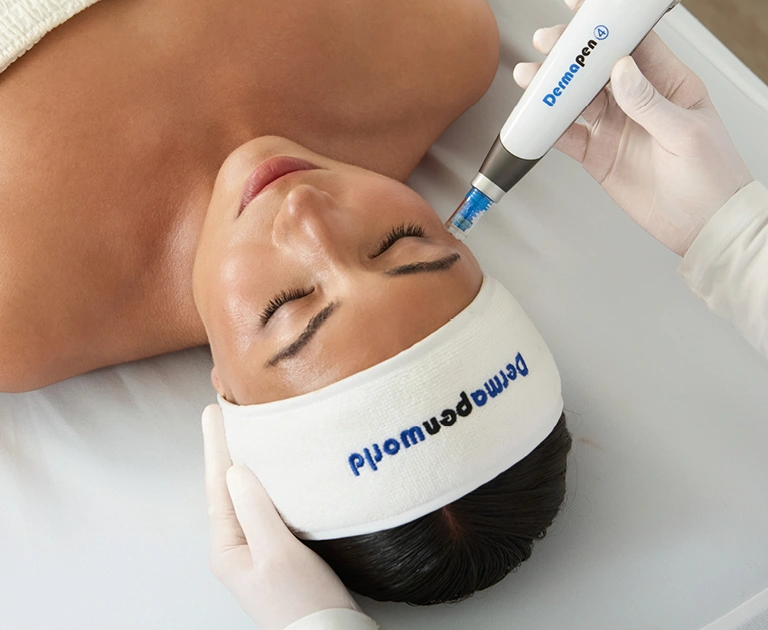 Microneedling offers broader skin rejuvenation benefits and can help improve texture, tone, pigmentation, acne scarring, stretch marks, and overall skin quality. Dr Christie-Schwarz explains how it works:
“Microneedling creates small puncture channels into the skin to activate an autologous regenerative cascade. This in turn promotes a healing and re-balancing process to address skin health, texture, tone, quality and integrity. The versatility of this, particularly when active ingredients are infused into the skin, delivers successful treatment of common skin indications including fine lines, hyperpigmentation, sun-damage, rosacea, dyschromia, acne, scars and stretch marks.”
What about downtime and the treatment experience for each procedure?
One of the most common questions patients ask when comparing microneedling vs Botox is which treatment involves more downtime. While both procedures are generally well tolerated, the experience and recovery differ.
“Botulinum toxin can only be administered by a registered medical professional. As it involves multiple, strategically placed, small injections, it may feel a little stingy for some patients. There is always the risk of unwanted bruising when treating around the peri-orbital region. Typically, patients experience some minor swelling following the procedure, but downtime is next to nothing,” says Dr Christie-Schwarz.
“Microneedling may be performed by all healthcare professionals (HCP). If a topical local anaesthetic is used, the patient generally will feel nothing but some pressure during the procedure. If no numbing cream is applied, the sensation can be likened to a scratchy or buzzing feeling. Typically following a standard procedure, the patient will feel and look like a mild sunburn in experience and sensation. This may last 2-36 hours on average. When performed correctly, there is no bruising, scabs, track marks, or skin flaking.”
How long to see results with Botox vs microneedling?
According to Dr Christie-Schwarz, Botox® may take up to two weeks for full results: “Traditional botulinum toxin formulas may take up to 14 days for the effects to fully activate. However, there are some newer products on the market which process significantly quicker. Results typically last 3-4 months.”
On the other hand, microneedling often delivers an initial glow within days, with ongoing improvements developing as the skin's regeneration process continues.
“Whilst many patients report visual skin improvement within a few days following their microneedling treatment, the regenerative process occurring within the skin can start to show more dramatic and longer-lasting effects from week 2 onwards,” says Dr Christie-Schwarz.
What lasts longer, microneedling versus Botox®?
“These are two different modalities, working on two different areas with different clinical endpoints,” explains Dr Christie-Schwarz. “Wrinkle reduction injections with botulinum toxin typically last 3-4 months, but individual results may vary. Once the toxin has been fully processed by the body, the skin returns to how it was before the injections.”
However, microneedling stimulates regenerative changes within the skin that may continue long after treatment.
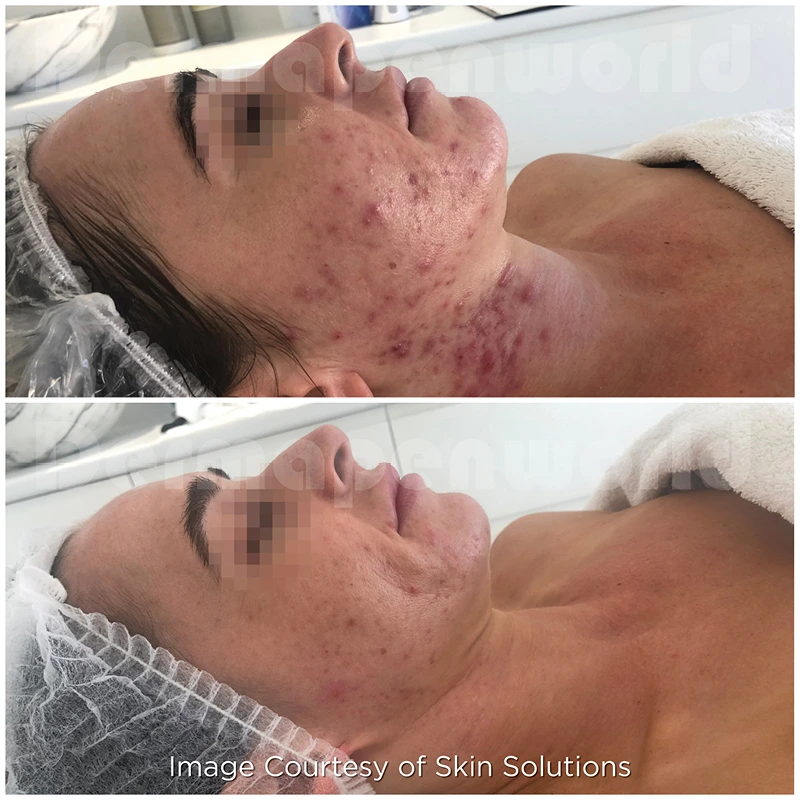 “Depending on the indication, following a course of microneedling treatments, the effects can be quite long-lasting. For indications such as scar or striae (stretch mark) revisions, the results can be almost described as ‘permanent’, so long as the area is not affected by further trauma. For indications such as wrinkles, acne, hyperpigmentation, rosacea or alopecia, microneedling ‘manages’ the condition, promoting control and balance. Just like botulinum toxin injections, ongoing sessions are required,” Dr Christie-Schwarz says.
“Theoretically as the body’s maturative wound healing response can continue anywhere up to 24 months, theoretically the effects of microneedling could last up to 2 years. This, of course, is hypothetical and not indicative for every patient or indication.”
Can Botox® and microneedling be combined?
Curious about microneedling before or after Botox® or whether combining both treatments can enhance results. In some cases, practitioners may use both modalities as part of a customised treatment plan, addressing both skin quality concerns and dynamic wrinkles.
As Dr Christie-Schwarz explains, advanced procedures such as MesoTox may combine elements of both approaches to achieve a smoother, more radiant complexion.
“MesoTox, Baby Botox® and similarly named procedures use varying dilutions of botulinum toxins (sometimes hyper-diluted, sometimes not) where the product is reconstituted with a hyaluronic acid gel (or similar) instead of the usual saline. Instead of traditional administration via intra-muscular or intra-dermal injections, the solution is microneedled into the skin. The effect can be likened to ‘glass skin’ when the full face is treated, promoting a luminous, tightened, almost ‘air-brushed’ effect. MesoTox may also be used to target facial regions affected by seborrhoea, dilated pores, fine crepey lines, excessive sweat and even the symptoms of rosacea.”
Can you use microneedling instead of Botox®?
Dr Andrew R Christie-Schwarz makes it clear: “No, it is like apples and oranges – these are two different modalities with two different outcomes. Joining their unique benefits together as part of combination therapies allows for the best of both therapies.”
What is the biggest misconception about Botox® versus microneedling?
 When discussing Botox® vs microneedling, many mistakenly assume the skin treatments address the same concerns. Dr Christie-Schwarz says that the biggest misconception is:
“That they are working on the same philosophy, deliver the same clinical endpoint and treat the same conditions. They are two very different procedures, and one does not replace the other.”
For patients trying to decide between microneedling vs Botox®, Dr Christie-Schwarz recommends focusing on overall skin quality first.
“Treat skin quality, functionality and health first with microneedling. Better skin integrity leads to better results, recovery and synergy with other modalities. There is no point having ultra-smooth skin, which does not crease, affected by melasma, acne and scars – this is not an ideal aesthetic outcome. Target the quality of the canvas first before trying to smooth and tighten it.”
Whether you're considering microneedling, Botox®, or a combination approach, the best results start with a personalised assessment.
Book a consultation with an Authorised Treatment Provider today to discuss your skin concerns, treatment goals, and the most effective plan for a flawless glow.
If you are a professional and wish to learn how to become a DermapenWorld Authorised Treatment Provider, click here.


